The Crankshaft — The Backbone of a Reciprocating Compressor
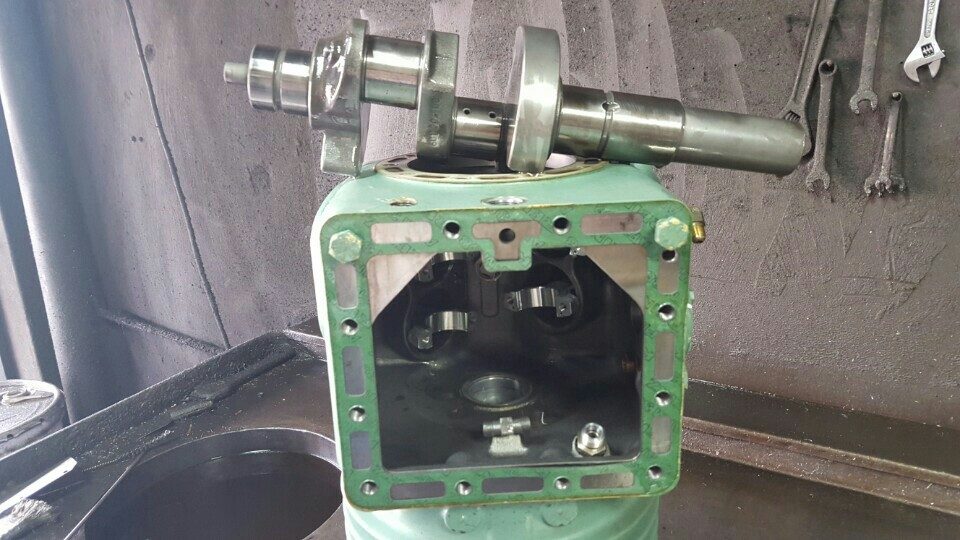
Lift the crankshaft out and you are holding the part that decides repair or replace. Here is what a tech checks on it.
Everything in a reciprocating compressor hangs off the crankshaft. The motor spins it, the connecting rods ride its journals, and that turns rotation into the up-and-down stroke that compresses gas. When you lift it out, you are looking at the part that decides whether the machine is worth saving.
This is the line between a cheap repair and a new compressor. A worn valve plate or tired reeds are routine — you replace them. A scored crankshaft journal is not; regrinding is rarely worth it on a field unit. Knowing which side of that line you are on, before you quote, is the whole job. I read the symptom history first — in R-Pro — so I open a compressor already knowing what I will likely find.